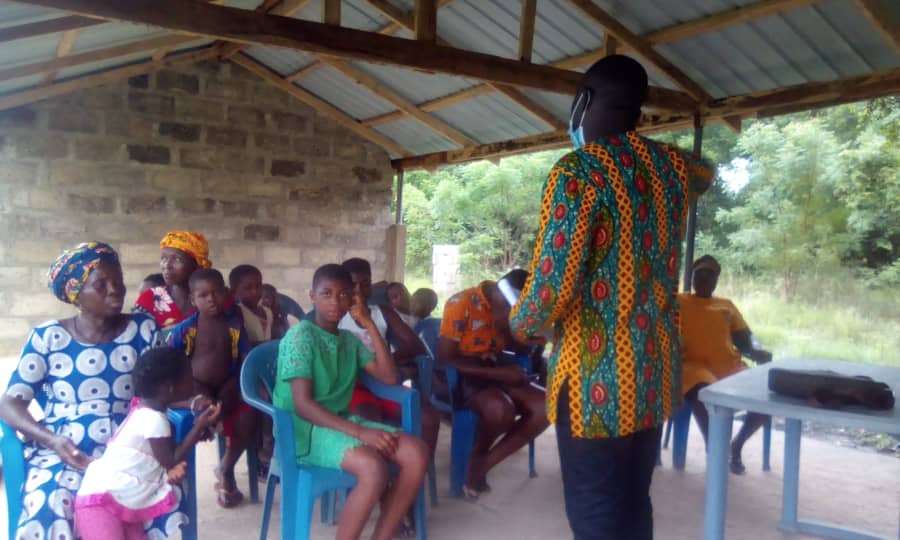
Second workshop of GrowYourDreams’ community engagement project: Let’s go digital!

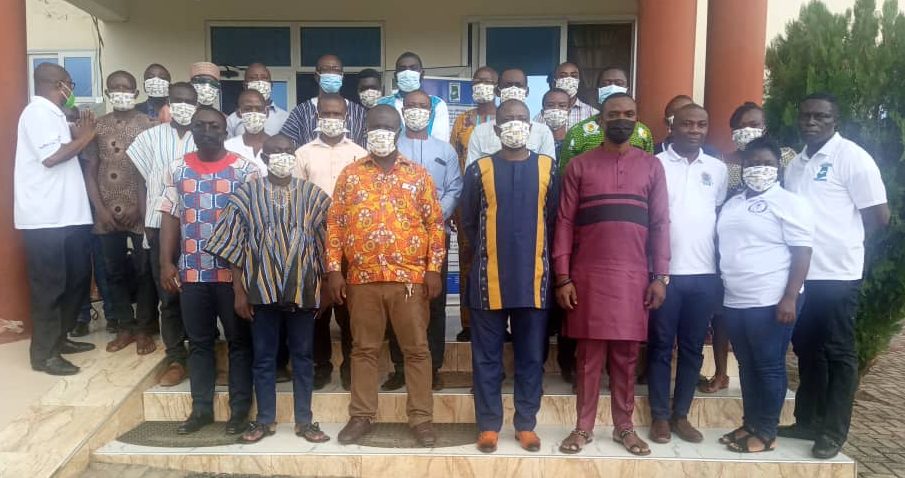
On November 24th and 25th, the team of GrowYourDream Fundation (GYDF) conducted a two-day refresher training in Adaklu for the leaders of 20 community groups established in the context of a one-year project funded from sources of the German Ministry for Economic Cooperation and Development (BMZ) and HITA, a German NGO operating in the Volta Region. The focus of the community groups is on empowering women to take a stronger role in decision-making in their families and communities, on encouraging men to reflect on the negative impacts of rigid gender roles and how these can be overcome, and on educating adolescents and their parents in matters of sexual and reproductive health.

Recent months have seen a large number of group meetings in each of the communities, plus meetings of the Project Group and consultative meetings of the GYDF team with key stakeholders in health and community development. The purpose of the refresher training was now to review the progress made, collect feedback from the group leaders and discuss individual experiences, with a view at ensuring that the achievements will be sustained and build upon after the end of the project duration, i.e. end of 2021.
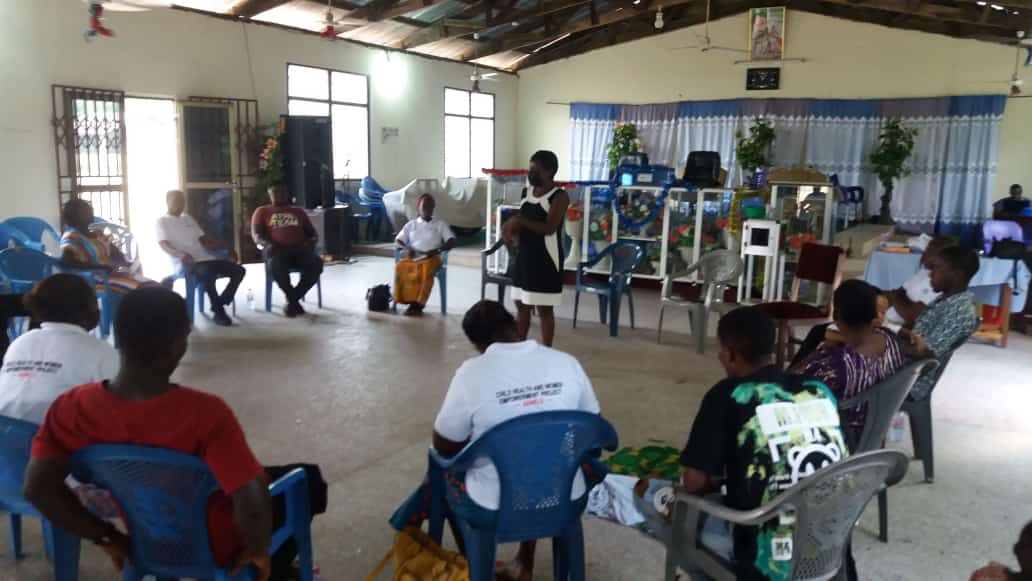
The training was opened with a short prayer from Mr. Fiah Daniel, a Daddies Club leader from Amudezudeve. This was followed by an opening speech given by Madam Antoinette, the public health nurse at Adaklu District Health Directorate. Madam Antoinette called upon the participants to continue their valuable training activities in their communities in spite of the Covid-19 pandemic. She stressed that GYDF’s activities compliment Ghana Health Service’s outreach activities across the Adaklu District very well, particularly with respect to communities that are remote and hard to reach through the road network. Madam Antoinette underscored the need for women empowerment as a means to achieve social development and improvement of health outcomes for all Ghanaians. She added that women empowerment activities must involve not only women but also men to achieve the intended results. In a final remark, Madam Antoinette asked the participants to lead the crusade in their communities to help fight the spread of Covid-19, which must not be allowed to endanger the progress made in term of health, social and economic growth across the globe, but especially in the developing world. Madam Antoinette concluded by calling on GYFD to extend its community engagement programme to other communities across the District.

GYDF Director Mr. Ahiave Jacob then summarised the project experience so far. He stressed how impressed and satisfied he is with the level of commitment and enthusiasm shown by all 10 communities for the project’s goals and activities. He reiterated the need to build good relationship with the key actors in the domains of health, women empowerment and community development in order to tap into their expertise and experience for supporting social development across Adaklu. A special emphasis during the discussions was placed on the topic of mental health, an area which the GYDF team wants to focus on in future activities in collaboration with the 10 communities. Representatives from the Ghana Health Service (GHS) and the Department of Social Welfare, Adaklu District attended the refresher training and contributed their expertise on the relevance for mental health for social development. They explained that a wealth of scientific evidence suggests that mental health is very important determinant of quality of life, and it plays a key role in ensuring people’s general health and wellbeing. The GHS, the Department of Social Welfare and GYDF therefore see a great need for proper and sound education on the core dimensions of mental health and how it can be supported at individual, family and community level.
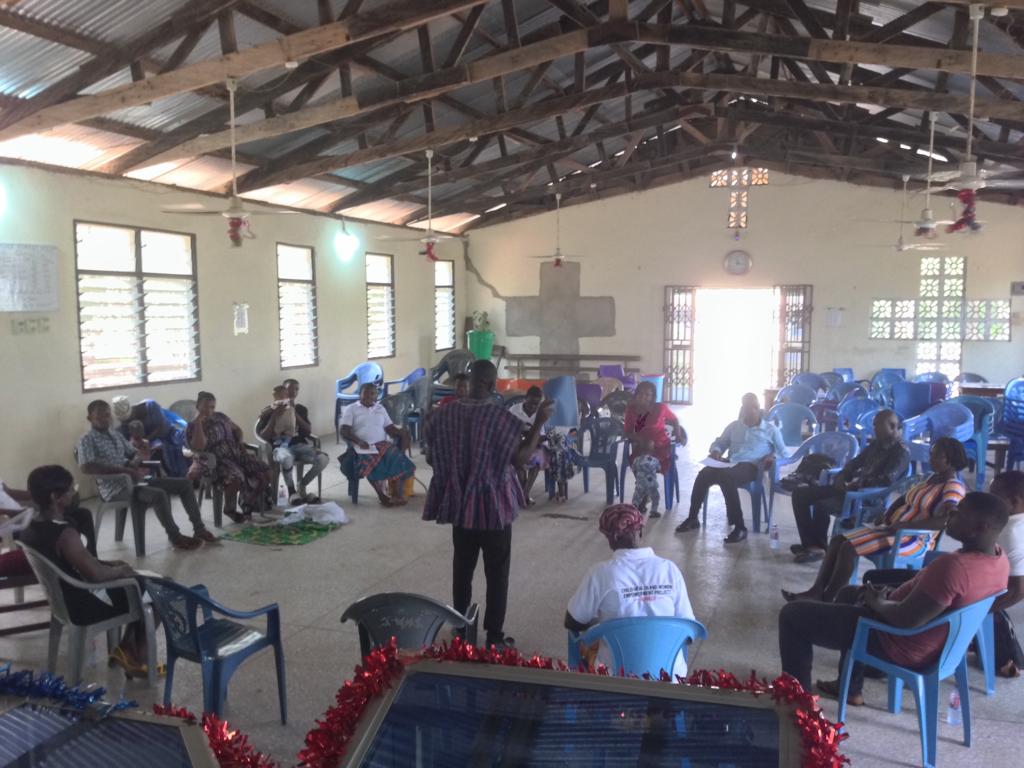
A key element of this year’s project is the attempt to make use of digital tools and online social networks for supporting the community engagement activities. The aim is to let all group leaders become part of a so-called ‘community of interest’ (in the form e.g. of a WhatsApp group) which allows them to network with each other, exchange experiences, suggestions, practical hints, photos, etc. The channel should also be used for the GYDF team to distribute multimedia content such as audio and video clips, infographics, etc., to support the group leaders in their activities. To partcipate, group leaders need access to a personal smartphone. Fortunately, the network of mobile provider Vodafone covers most of Adaklu, and charges for sending Whatsapp messages and other data are modest. An earlier investigation had shown, however, that most group leaders do not own a smartphone yet. To be able to kick-start the digital networking activities nevertheless, HITA agreed to provide additional funding for 20 inexpensive smartphones, which were then procured by GYDF from a retailer in Accra.

At the workshop, each group leader was presented with a smartphone, on which Whatsapp and Facebook had been installed by GYDF beforehand. SIM cards were handed out and registered by a Vodafone representative who had been asked to attend. Some mobile credit, funded from the project budget, was provided as well. The GYDF team then gave an introduction into how to use the device and, in particular, the Whatsapp application. A Whatsapp group was set up on the spot through which communication with the full group will take place in the future. The workshop organisers made sure that before the end of the event, each participant fully understood how to operate the smartphone and take part in the discussion via Whatsapp.
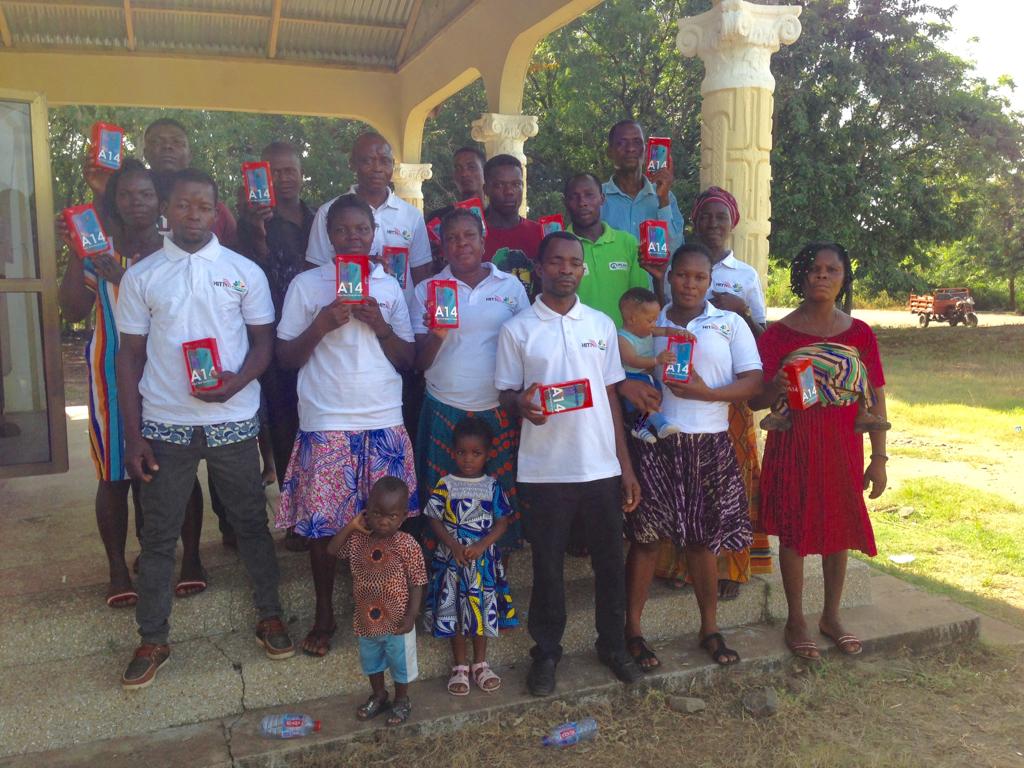
The GYDF team thank all workshop participants for their dedication and enthusiasm for the project. Group leaders will be contacted through the Whatsapp Group to organise the final activities in 2021. A meeting has already been arranged with four group leaders who were not able to attend the workshop, at which they will discuss the project experience and be equipped with smartphones as well.
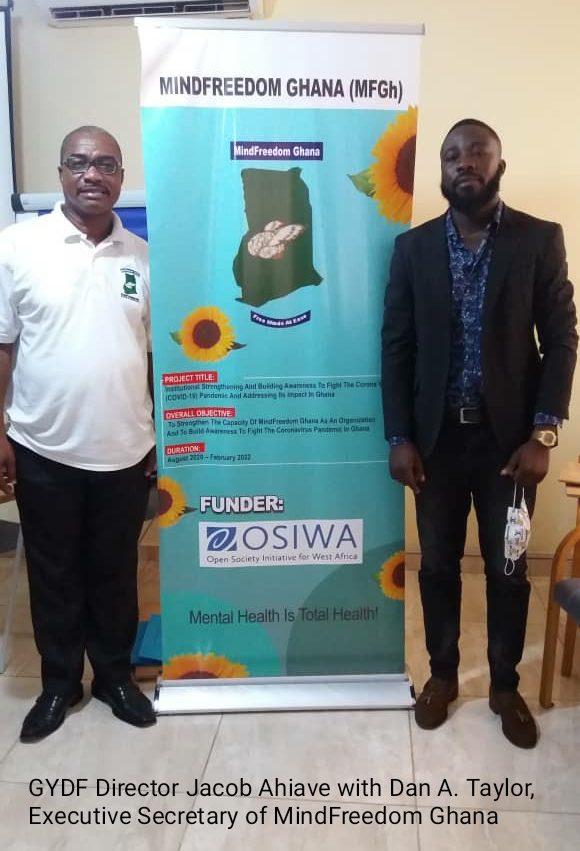
GrowYourDream Foundation receives training from MindFreedom Ghana on how to address Covid-19’s impact on mental health

MindFreedom (MFGh) Ghana is a non-government organisation established in 2004 with the vision of improving the mental health and social lives of persons with psychosocial disabilities in Ghana as well promoting their human rights and dignity. MFGh currently seeks to foster and strengthen links with similar minded organisations both across Ghana and internationally to harmonise operations, learn from each other and explore diverse forms of cooperation, all with the goal of upscaling the assistance available to people with disabilities. One of the key objective of MFGh is to support and assist people with mental disorders in their treatment regiment and advocate for conditions – both in the communities and at psychiatric facilities – that would not infringe on their human rights and dignity.

MFGh invited organisations and experts interested in mental health matters to a workshop held in Jasikan (Oti Region) on 26 October, 2021. GYDF director Jacob Ahiave participated in the training and also used the opportunity to network with representatives from MFGh and the other workshop participants. In attendance were the Mental Health Nurses, the Oti Region Health Director, several District Directors as well as representatives from various District Assemblies from across the region.

The central topic discussed at the workshop was the impact of Covid-19 on mental health. There is significant evidence that the circumstances surrounding the Covid-19 pandemic have caused high levels of stress and tension, i.e., the inability of the body to cope with novel stressors. Results observed include negative impacts on both physical and mental well-being.

The workshop then moved to a discussion on how such stress can be managed. Proven methods include exercise, meditation, sufficient sleep or rest, a healthy balanced diet, and avoidance of alcohol.

In relation to the Covid-19 pandemic, there have also been signs of increasing numbers of people being affected by depression, a major mental health problem. It can be caused by states of emotional agitation, a clinical condition or another medical conditions. Typical symptoms of depression are: poor concentration, loss or increase in appetite, guilty feelings, loss of energy and loss of interest. While mild depression can often be managed by appropriate behaviour such as frequent exercise, a serious depression usually means that medical assistance should be sought.

The discussion finally turned to substance use disorder. Three major stages of substance use or addiction can be distinguished: loss of control, compulsion to use, and craving continued use. Symptoms include hallucinating, delusion, abnormal speech, and abnormal behaviour. Tackling substance use disorders requires a mix of effective education, effective screening – which means a public health approach is needed at all levels.

Grow Your Dream Foundation meets with UK expert on gender equality and mental health

Lesley Hill, an art therapist and mental health practitioner linked to UK-based NHS Scotland’s Highland /Ghana Health Partnership and Multi Agency International Training and Support (MAITS) visited the Grow Your Dream Foundation in October 2021 to see how best GYDF might add a mental health focus to their community work.

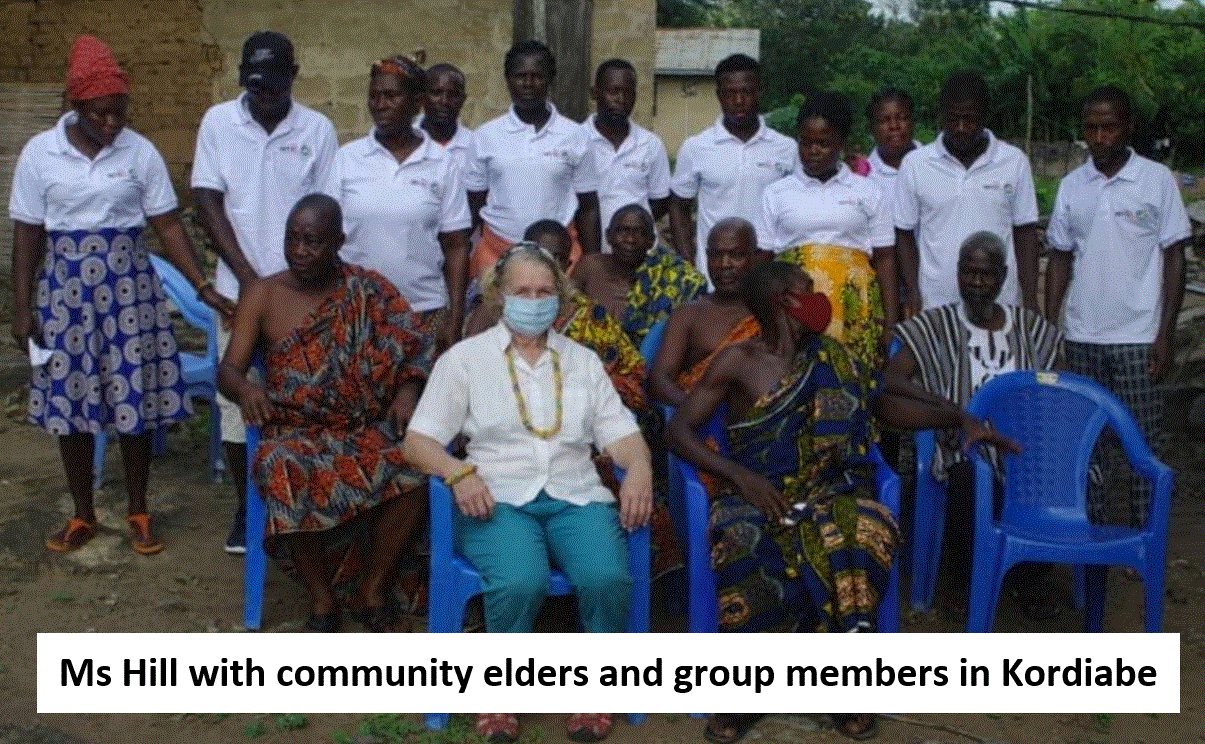
GYDF Director Jacob Ahiave Sedemor facilitated the trip along with GYDF colleague Linus Gaba. They orientated Ms Hill to the GYDF gender and health work and community contexts. They facilitated a visit to Kordiable, an ‘off the beaten track’ community up the mountain in the Adaklu District. This visit served as an initial introduction of the concept of mental health within GYDF work for the community and an opportunity for Ms Hill to deliver a taster art session to show how using art can enable communication and discussion within the community groups.  The 45 min walk along a rocky path and under the shade of the trees led to into the community itself, nestling below a steep rockface. The chiefs and community provided their customary welcome with singing and drumming, speeches and gifts. The topic of mental health was briefly introduced by Jacob Ahiava and Linus Gaba followed by the art exercise. This enabled discussions about good and bad experiences in couple relationships, a roof blowing off – then being repaired, a sick child who got better, having no money then making money and being able to buy food.  Thus using art in this way proved to be a useful tool to explore difficulties in life and help to talk about them.

A visit to the Hasu Polyclinic to meet community care and mental health personnel, share GYDF intention to develop mental health within their remit, and flag up the availability of community health for disabilities training available through MAITS, rounded off the visit.

Following the visit, Ms Hill linked the GYDF team to Mr Dan Taylor, Director of Mindfreedom Ghana, based in Accra. Jacob Ahiave was quick to take up the opportunity of joining a Mindfreedom training event in Jasikan in the north of Volta region which focused on the impacts of Covid 19 on mental health.

Daddy’s Clubs and Mother Support Groups up and running — additional focus on adolescent girls

In order to strengthen the social development of Adaklu, one of the most deprived Districts of Ghana, a project has been set up based on the conviction that women empowerment is an effective avenue of growth and development in the region. Grow Your Dream Foundation (GYDF), together with German donor Schmitz Stiftungen and partnering NGO HITA, has started to roll out the project in ten communities across Adaklu District earlier in 2021. The focus is to empower women to become assertive and productive, e.g. by enabling them to take developmental decisions geared towards community growth. To this end, our approach is to work with community members directly – not only with women, but also with men, as they are key agents of any development towards more gender equality at family and community level.

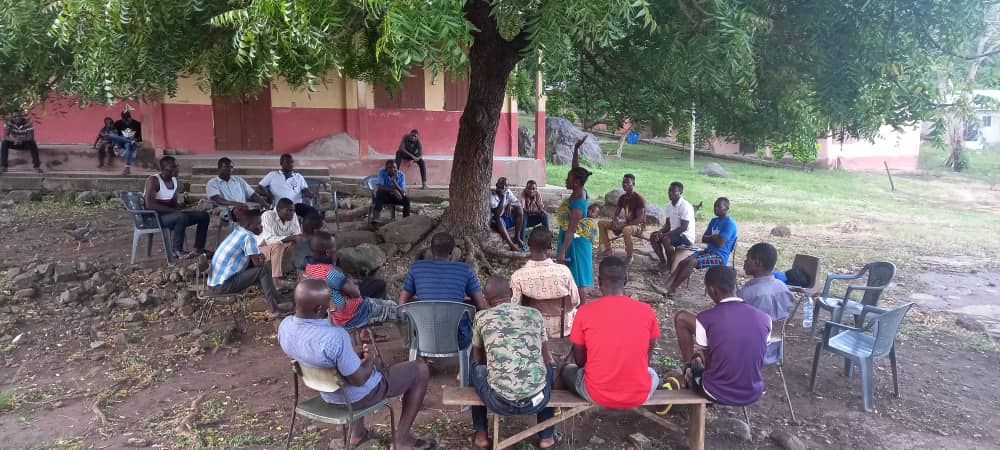
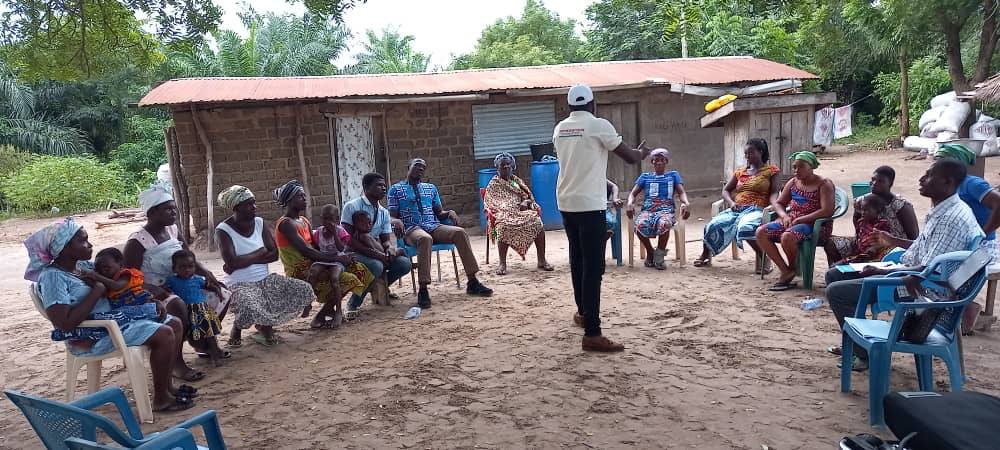
The project kicked off in spring 2021 with engagement of key local actors for health, social and community development and the traditional gate keepers (community elders) in 10 selected communities across Adaklu. Community groups were initiated and community leaders received initial training through a dedicated workshop. Since then, the Daddy’s Clubs and Mother Support Groups have received hands-on support in their activities from the GYDF team. Typically, GYDF staff visit each group once each month and engage them in some exercises for awareness raising and development of practical solutions to address traditional barriers to gender equality.

Daddies Club Meeting in Golokope, supported by a community health nurse (21 May, 2021)

Support was obtained from Ghana Health Service staffs, who were invited to some group sessions focusing on educating male and female community members on key health issues related to MNCH and adolescent reproductive health. Through cooperation with community health nurses, who are well known and respected by community members, the project’s gender transformative approach was reinforced.

Because of the increasing self-confidence of group leaders to chair meetings themselves (based on the training they had received at the first training workshop), the role of the GYDF team has changed since starting the project; it is now focused mainly on monitoring and supervising group meetings and to assess the work and activities being undertaken by each group.

Combined Women and husband group meeting in Golokope (22 August, 2021)

The GYDF team recently also used visits to communities to address other target groups, such as adolescent girls and their parents (see photo below).

Workshop for adolescent girls and their mothers in Kpodoave (12 September, 2021)

Next steps in the project are a second training event scheduled for late November 2021, which will be used to discuss feedback and practical impacts of the activities, as well as to jointly develop a plan how the initiative can be sustained over the longer term – and possibly extended to cover other aspects relevant to social development in Adaklu’s communities.

A great success: First training sessions with appointed leaders of 20 new Daddy’s Clubs and Mother Support Groups

Early May saw the first round of two planned training events in which the designated leaders of the Daddy’s Clubs and Mother Support Groups of 10 Adaklu communities were provided with key information and skills needed for their role. Four persons (two women and two men) from each of the ten communities participating in the project attended the workshops. The 10 communities are Amuzudeve, Golokope, Dawanu, Seva, Dorkpo, Dzakpo, Have, Ahunda Kpodzi, Gavorkope and Kpodoave.

The workshops were designed in the form of “train the trainer” activities with the objective to make group leaders understand their role as key facilitators of a community-wide process through which to discuss gender roles and stereotypes, stronger male engagement in the family and the need for female empowerment.

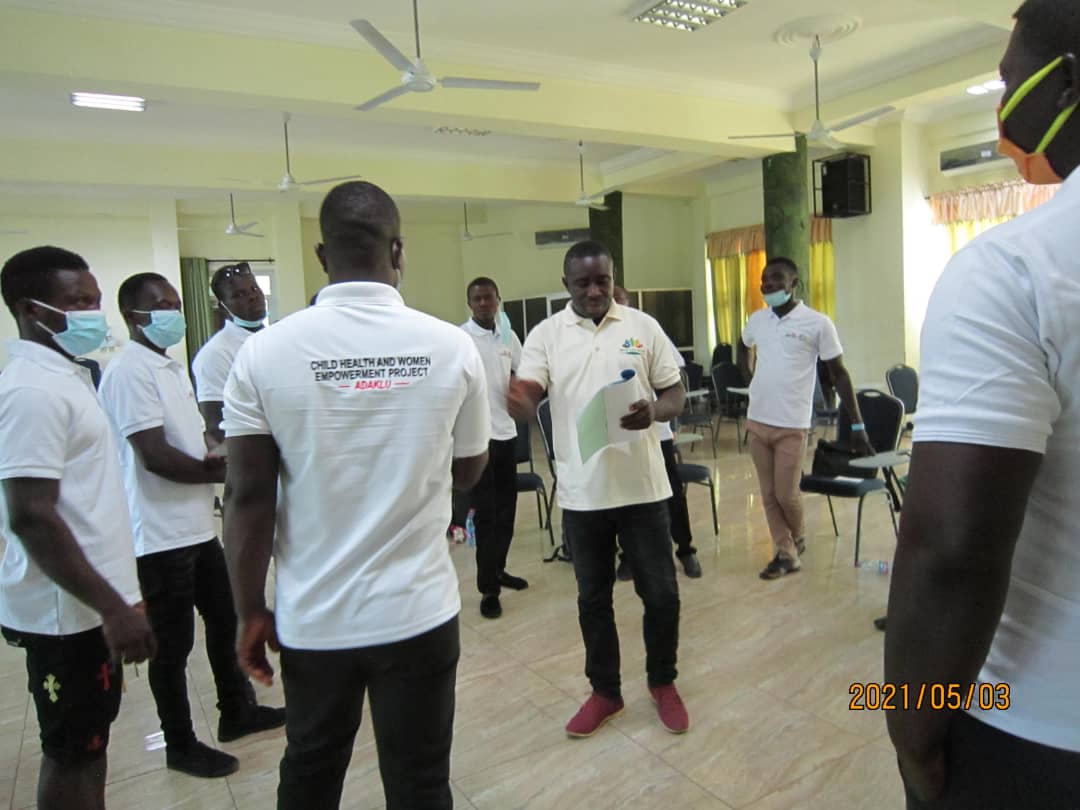
The workshop with the appointed leaders of the 10 new Daddy’s clubs aimed to discuss, in particular, the potential of male engagement in maternal, newborn, and child health (MNCH) and sexual and reproductive health (SRH). It took place on May 3rd. Male engagement here means men taking an active role in protecting and promoting the health and wellbeing of their partners and children, which requires a substantial and lasting behavioural shift towards more gender-equitable relationships between male and female partners. The training also included discussion of masculinities, i.e. the set of attributes, behaviours, and roles commonly associated with men and boys, and how they keep men (and women) from enjoying more fulfilling and equitable partnerships.

The workshop with the leaders of the 10 new Women Support Groups (also called Women Clubs) dealt with the methods to be used for empowering women and girls to be become more productive members of their community and to make their own decisions e.g. in matters of health provision for themselves and their children. The training also focused on addressing gender biases that are still commonplace in Ghana as a result of cultural and social traditions that have relegated women and girls to the background and also allowed the persistence of violence against women and girls. The session took place on May 4th.

Both sessions were organised as a mix of presentations, exercises, group interaction and lively debate. The exercises, each of which designed, tried and tested by the GYDF team, included “Value Clarification”, the “Hours-in-a-day” discussion, a roleplay called “Persons and Things”, the “African Woman tool” and the “Women box”.

Both workshops were conducted at a central training location in Ho, the capital of the Volta Region. The location was chosen because it can be reached comparatively easy from any part of Adaklu. Each attendees received a training manual, refreshments, and reimbursement of travel costs. They were also provided with a t-shirt bearing the project tagline and logos, which will allow them to signal their role in the project to fellow people in their home community.

Finally, participants were informed about the next steps to be taken in the project. Group leader are supposed to involve their local group in a discussion based on what they have learned during the training session. They will be supported in this task by the GYDF team through monthly, scheduled visits by the field officer in charge, during which new exercises will be conducted and input for the discussion provided; by meetings of the GYDF team with chiefs and local opinion leaders in each participating community, who in their role as gatekeepers are also key stakeholders of the project; and through digital communication channels, namely Whatsapp Groups set up for the purpose of connecting group leaders with each other and for sharing content (infographics, video clips, short guidelines) that will help members in their work. A second round of workshops is scheduled for later in 2021.

Attendees showed a lot of commitment and participated in the workshops with much enthusiasm. They voiced satisfaction with the content of the training and now look forward to start their their new role as group leaders once back in their community.

GYDF Director Jacob Ahiave talks about Covid-19, Volta Region and new community engagement project

The Director of the Grow Your Dream Foundation (GYDF), Mr Jacob Ahiave, talks to journalist Günther Michels, who is also a member of the Board of HITA, a German NGO. Ahiave gives an update on the Covid-19 situation in Ghana and the Volta Region, and talks about the new project run by GYDF with the support of HITA and the Schmitz Stiftungen, a German donor organisation. The interview was recorded on 18 May, 2021, and can be accessed here.

Grow Your Dream Foundation kick-starts project on gender equality, women empowerment & health in 10 communities across Adaklu

Adaklu-based Grow Your Dream Foundation (GYDF) is partnering with a German donor organisation and a German NGO (HITA) for an 11-month project from which communities across the District will benefit considerably. The project focuses on community engagement for strengthening gender equality and its role in social development, as well as health education and how to fight the spread of COVID-19.

The project commenced on February 1st with the community entry activity. Followed established protocols, the GYDF team first contacted the opinion leaders, chiefs and elders of each community and introduced the project to them. Once their support was ensured, we were able to start interacting with the members of each community and to present to them the project, its objectives and contents. This also allowed us to assess whether there is sufficient interest among community members (fathers, mothers, adolescents) to actively participate in the project, i.e. to take part in the monthly Club meetings to be chaired by the GYDF team. In each village we obtained the consent of individual community members. Our initial meetings also acted a platform designed to allow an open, initial stage discussion about the project, the need for activities of this kind, and the potential benefits for the community.

Each of the ten communities we approached have warmly welcomed the project and committed to give it their maximum support to ensure its success. Fathers (Daddy’s) and Mothers Clubs have already been established, and a Club Leader designated for each of them. Adolescent Clubs will be added later based on interest, once the communities have made experience with the format.

The ten communities participating in the project are thus confirmed: Ahunda Kpodzi, Amuzudeve, Dawanu, Dorkpo, Dzakpo, Gavorkorfe, Golokope, Kordiabe, Kpodoave and Seva. Total number of people who participated in our introductory meetings in the ten selected communities has been 654 (303 women and 351 men). The next step in the project is a “train the trainer” workshop to be organied in late March or early April this year, to which all Club Leaders will be invited.

New Project together with HITA, funded by German donor organisation

Adaklu’s Grow Your Dream Foundation (GYDF) co-operates with German NGO HITA for a new 11-month project, from which communities across the District will benefit considerably. The project, which commenced on February 1st 2021, is based on prior work by GYDF and focuses on strengthening gender equality and its role in social development. GYDF already runs several Fathers, Mothers and Adolescent Clubs in communities across Adaklu, to which every interested community member is invited to participate in a discussion about gender roles, the division of responsibilities between men and women and overcoming traditional barriers that prevent women from participating in decision-making processes. Other topics include sexual and reproductive rights, new ways of generating income, women’s access to micro-credit and – since March 2020 – preventing the spread of COVID-19.

The new project aims to make these activities more effective and efficient through a “train-the-trainer” programme and by harnessing the potential of digital tools. Club leaders from at least 10 communities will receive training to enable them to take a pro-active role in promoting gender equality and social development in their community. Monthly club meetings are made more effective through the use of handouts and other printed materials as well as materials in digital format (available on tablet). Groups are set up on online social networks such as WhatsApp so that club leaders can use their own smartphones to network and share content across locations. An impact analysis in the affected communities will be carried out by means of focus groups, supplemented by questionnaire interviews where necessary.

These activities will create the basis for the subsequent expansion of Fathers, Mothers and Adolescent Clubs to the entire District. Adaklu is one of the poorest Districts in the whole of Ghana and is lagging behind in development, as evidenced by the high maternal and newborn mortality rates and the number of teenage pregnancies.

The project is funded by a German donor organisation, the Schmitz Stiftungen, and GYDF partner HITA. For more information about the project, please get in contact!

Looking back to a successful 2020

I am writing this note to thank you for your continued interest and commitment to advancing gender equality and building a healthy society in Adaklu District and beyond in Ghana.

When GROW YOUR DREAM FOUNDATION was founded in Ghana over 6 years ago (then still under the name DreamsAlive), we hoped to challenge the way we think, change the way we interact, and ultimately, shift the systems that shape and support gender inequality and unhealthy ideas of what it means to be a healthy society. We believe that men must be partners in the revolution for gender equality: the revolution that women and women’s rights activists lead. We are still working every day in service of this mission.

Will you join us by making a contribution today, to advance the work of GYDF?

Over the course of this year, COVID-19 has laid bare the critical nature of this work. In the face of a pandemic that has claimed more lives than any other global event of the past decades; we witness men in positions of power who see caring for themselves and caring for others as a weakness. We see women exiting the workforce, demonstrating what we know to be true – that the responsibility of unpaid care work rests unfairly on them. We have also seen men’s use of violence against women spike, and have seen women quarantined with violent male partners. And, we see that people of low-income families are being hit the hardest.

We have contributed to address these problems through a range of activities. With your support last year, we:

  • Launched an initiative to engage teachers, parents, and coaches to support boys and girls with school bags and face masks in Adaklu District – Ghana;
  • Worked with survivors in Adaklu to help them to heal, and to break free from legacies of violence;
  • Partnered with GHS and other institutions to mainstream efforts to boost men’s participation in parenting and care work;
  • Provided policymakers, business leaders, and purpose-driven brands with research, evidence-based strategies, and programmes that contribute to system-level change.

Together with our partners, we have demonstrated that change is possible. As we head into next year, we will continue to build on our evidence-based approaches and global advocacy to prevent violence, promote healthy society, and advance gender equality around the world.

Grow Your Dream Foundation – Ghana

We celebrate International Day of the Girl 2020

ON 11 OCTOBER THE GROW YOUR DREAM FOUNDATION JOINED FORCES WITH COMMUNITIES IN ADAKLU TO CELEBRATE INTERNATIONAL DAY OF THE GIRL 2020.

The international observance day was declared by the United Nations in 2012 and is celebrated each year. This year’s theme was “My Voice: Our Equal future” seized the opportunity to reimagine a better world to inspire adolescent girl. It focused on demands to live free from gender based violence, harmful practices and HIV/AIDS.

In Adaklu, the Grow Your Dream Foundation is using community based information centres to reach out to thousands of this girl. Pertinent issues affecting the lives of these girls generate discussions and help find ways to remedy them. Our Community Volunteer Groups formed a year ago were also encouraged to strengthen and maintain fruitful discussion on this year’s theme to gain proper attention in their various communities.

Due to the COVID-19 pandemic and lack of funds to organise mini durbar and community meetings, we redirected our strategy by using this medium to reach thousands of Ghanaian in this part of the Volta Region. Community Health Nurses in several villages around Adaklu used the occasion to focus on engagement around the HIV/AIDS topic; they provided detailed information to many girls in our target audience.

Grow Your Dream Foundation as an organization is looking forward to ensuring children in deprived areas or from marginalised groups of the society in Ghana are equipped and supported with adequate tools and information to ensure their health and well-being. We have already inspired thousands with programmes which tailored to advance their safety and development.